Civil Society’s Role in Sustainable Development and Peace
Labor Relations in South Asia: Impacts of Increased Non-State Actor Activity on Civil Society Collectivism
Faisal Haq Shaheen*
Across countries, labor relations in public sector are categorized by a diverse range of organizational challenges and cultural experiences as both unions and management struggle to compensate for the overwhelming pressures stemming from neoliberalism. In developing countries, the complexity of drivers restricting unionization and collective bargaining in public sectors requires urgent examination. A key variable that impacts staffing levels within the public service sectors of the south is the proliferation of domestic and international non-government organizations (NGO/INGO). While NGO activity may buttress government responsibilities, it is social, economic and political attractiveness that undermine the medium and long-term capacity of public administration as a whole. Specifically, the ‘civil society career path’ that leads university graduates to careers with NGOs and INGOs diverts valuable management and technical talent away from the public service, complicating succession planning and the long-term talent pool within the government. While short term successes are being felt through NGO facilitated service delivery, social advocacy, political mobilization and policy development, the indigenous leadership and management knowledge base required to address the long term challenges of the state functions is being ‘outsourced’.
This paper seeks to examine and demonstrate that the various social, economic and political factors, which first appeared vis-à-vis the Bretton Woods Institutions1 are now re-emerging through NGO and INGO activity to the detriment of the public sector and its potential union capacity and in turn, future management capability.
The migration of skilled, indigenous, graduate labor from the formal public sector to the new ‘global civil society’ is having a ‘draining effect’ on the administrative capacity of the state, which is problematized through various studies and research on the global civil society phenomenon and the rise of ‘the development industry’.
More specifically, the paper builds the case for studying the impact that the labor shift, outside of the state structures is having on labor relations and capabilities of public sector staff and union potential. The paper begins with an examination of the public service in developing countries and South Asia in particular, the growth of the development movement, featuring the case study of Pakistan, after which an analysis of the key issues and dynamics emerges. The paper seeks to provide policy solutions that may assist in addressing the current state of public sector labor relations in South Asia and other developing countries.
 * Faisal Haq Shaheen is a Management Analyst with the City of Toronto. A graduate student at the Faculty of Public Policy and Administration, Ryerson University, Toronto, Canada, he is also a Visiting Research Associate at the Sustainable Development Policy Institute (SDPI) in Islamabad, Pakistan. * Faisal Haq Shaheen is a Management Analyst with the City of Toronto. A graduate student at the Faculty of Public Policy and Administration, Ryerson University, Toronto, Canada, he is also a Visiting Research Associate at the Sustainable Development Policy Institute (SDPI) in Islamabad, Pakistan.
1 The Bretton Woods Institutions, namely the International Monetary Fund and the World Bank as well as the United Nations to a lesser degree, have been blamed by academics from the global south for ‘anglicizing’ the elite cadre of officers and alienating the lower ranking peons who are more involved in service delivery.
Civil Society and Development of Social Infrastructure in Pakistan
Fayyaz Baqir*
Democratic discourse is influenced by the ways and means available to citizens to check and balance the power of the state in shaping their choices and life patterns. This depends on the range and diversity of Citizens’ Institutions that articulate and energize their interaction with the state. In essence the question of discourse probes how voluntary associations negotiate their turf with associations based on coercion and hegemony. There are two important pillars of citizens’ organizations, interest based organizations and supporting mechanisms, which define the contours of citizens’ discourse. Social infrastructure in all its diversity draws strength from these two sources to shape the democratic discourse. This paper will describe the role of social infrastructure in defining democratic discourse with reference to innovative cases from Pakistan. It will review and analyze the nature, diversity and dynamism of social infrastructure in Pakistan and describe its role in defining the democratic discourse. The author would be using reports, publications, case studies and field notes on selected CSOs and interviews with functionaries of CSOs engaged in people centered practices for democratic change. It is hoped that the paper will show that the vitality of democratic discourse depends on the diversity of civil society, as well as pluralism and connectivity among the members of civil society.
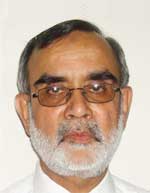 * Fayyaz Baqir is the Senior Advisor on Civil Society at the UN Office of the Resident Coordinator, United Nations Development Program (UNDP), Islamabad, Pakistan. * Fayyaz Baqir is the Senior Advisor on Civil Society at the UN Office of the Resident Coordinator, United Nations Development Program (UNDP), Islamabad, Pakistan.
Strengthening the Role of Civil Society ‘Major Groups’ in Sustainable Development
Mahmood A. Khwaja*
Major public groups recognized and generally accepted so far include: non-governmental organizations, farmers, women, religious scholars, the scientific and technological communities, children and youth, indigenous peoples and their communities, workers and trade unions, business and industry and local authorities. Amongst other things, major groups provide advocacy to foster accountability, expertise, baseline data, public awareness-raising, effective information dissemination and formal and informal education at all levels of society. Major groups have also played an active supporting role in developing a number of multilateral environmental agreements (MEAs) by states and governments.
In Pakistan, although some of the ministries regularly involve major groups in developing policies and plans for sustainable development, the engagement tends to focus on only a few major groups. Also, the exchange amongst them appears to be limited. Some organizations also seem to monopolize the major groups’ representation on national and provincial committees and bodies, thereby minimizing wider participation and experience sharing. It would be argued that greater use of multi-stakeholder dialogues and consultations would be most useful to facilitate the early and effective implementation of national policies and standards.
There is a need to benefit from our own earlier success stories of stakeholder partnerships in the development and implementation of national policies, while also strategizing the involvement of major groups in the future. Both the national “Environment Standards Committee” and the “Clean Fuel Committee” constituted by the Pakistan Environmental Protection Council (PEPC), met most of their objectives. Salient features of the membership and working modalities of these committees would be briefly described and discussed in the presentation. “Constituting issue-specific national stakeholder committees, with the composition and working modalities could again be a practical and effective way to enhance and strengthen the real involvement of major groups for sustainable development in Pakistan” (Khwaja 2008).
A review of stakeholders responses would be presented and discussed to look at ways and means for (a) civil society major groups mobilization as human resource, (b) peace and sustainable development as their collective responsibility, (c) motivation of major groups for an effective support towards sustainable development and peace, (d) effecting lasting change in social attitudes for sustainable development, (e) optimal and effective representation of major groups, both for national and regional sustainable development and (f) empowerment of major groups for their due role in sustainable development.
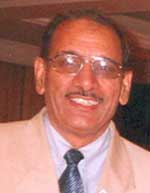 * Dr. Mahmood A. Khwaja is a Research Fellow at the Sustainable Development Policy Institute (SDPI), Islamabad, Pakistan. * Dr. Mahmood A. Khwaja is a Research Fellow at the Sustainable Development Policy Institute (SDPI), Islamabad, Pakistan.
Reference:
Khwaja, Mahmood A. (24 February 2008), ‘A Call for Civil Society’s Role,’ The News.
|


