|
|
| |
| Impact of armed conflict on female education in District Swat, Pakistan |
| Saeeda Khan* |
|
During 2007 and 2009, the Pakistan Army undertook two military operations, Operation Rah-e-Haq (Operation Righteous Path) and Operation Rah-e-Rast (Operation Straight Path) in District Swat, Pakistan against rising militancy and violence by the Taliban. Female education remained a major target of the militants in Swat. The conflict led to immense destruction not only confined to physical damage to education infrastructure, but also caused a huge setback to development, growth and overall progress of the education sector. This study examines the negative effects of the exposure to conflict on female educational attainment in district Swat.
For the purpose of data collection three tehsils (administrative sub-division of district): Matta, Kabal and Khawazakhela were selected purposively as they were extremely affected during the conflict as compared to other tehsils. Further, from each tehsil, the most effected Union Council (UC) was selected: UC Shakardara from tehsil Matta, UC Bara Bandai from tehsil Kabal and UC Fatehpur from tehsil Khawazakhela were chosen. For data collection, structured questionnaires were administered to a randomly selected sample of 350 respondents, consisting of literate females, from the sample areas. The sample was allocated proportionally according to the population of each Union Council: 110 from UC Shakardara, 100 from UC Bara Bandai and 140 from UC Fatehpur.
The results, evaluated through descriptive statistical analysis, indicate that exposure to the conflict has had a negative effect on girls enrollment in higher education. Furthermore, it shows that the girls enrolled in secondary education during the time of conflict were more affected as compared to girls enrolled in primary education. The study also revealed that the militants targeted female education as they considered female education a western concept; and identified destruction of schools with bomb blasts and threatening of teachers as the most persistent type of violence against female education.
Thus, this conflict has created disparity in the educational attainment of women and has restricted thousands of females from accessing the basic right of education. The Ministry of Education should initiate programmes like ‘Emergency education for children’ implemented in Tanzania and Colombia in conflict affected regions, including Swat. The provincial government should provide funds to the local government for rebuilding schools and for enhancing the security of educational institutes to encourage female education.
|
 |
* |
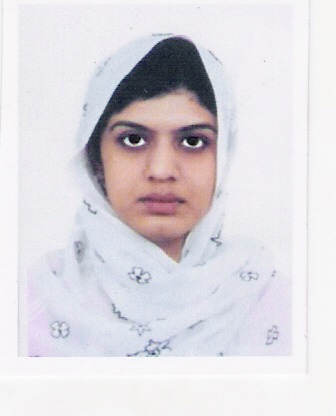
Ms Saeeda Khan is an M.Phil student of
Development Studies at the Pakistan Institute of Development Economics (PIDE),
Islamabad, Pakistan.
|
|
|