|
|
| |
| Post-2014 Afghanistan: Managing political challenges and economic opportunities |
| M. Qasim Wafayezada* |
|
Afghanistan had its first peaceful and democratic transition of power from President Karzai to President Ghani in October 2014. In spite of active ethnic politics and insufficient democratic institutional arrangements, the peaceful leadership change was a leap forward in Afghanistan politics. The new government is tackling with formidable political challenges to lead Afghanistan through the ‘Transformation Decade 2015-2024’ and take constructive steps to consolidate peace and democracy that would ensure a self-sustaining state capable of reasonably effective governance in the post-2014 period.
Within the context of the transformation decade, Afghanistan needs to make two transformations from two long lasting and crippling conditions: 1) from a rentier state to an economically self-sustaining one; 2) to transform its status from being geostrategic to one of geo-economic importance.
Afghanistan has been dependent on foreign aid for much of its recent history which accounts for many of its political problems. A heavy dependence in the future would make Afghanistan vulnerable to changing international commitments and support, as past experiences have proven. The country, therefore, needs to effectively concentrate on economic development through effective management of economic opportunities mainly in its extractive industry.
Due to its weak political leadership, Afghanistan’s geostrategic importance has been its curse, to serve as a gateway to India and Central Asia, or a backyard and ‘strategic depth’ for its competing neighbors. Beyond, political detractions and obstacles, this paper endeavors to explore the possibility of these transformations, which in turn highlights Afghanistan’s vital role in increasing regional economic cooperation in South Asia as one of the least integrated regions in the world.
|
 |
* |
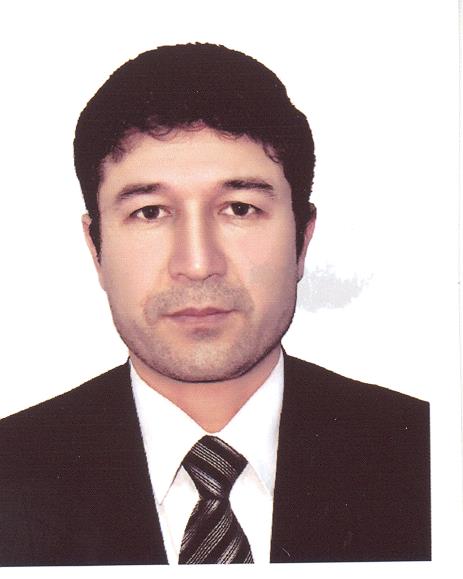
Dr. M.
Qasim Wafayezada is serving as Deputy Director General of Afghanistan’s Civil
Aviation Authority and has been an expert of social and cultural affairs within
the Secretariat of the Ministers’ Council of Afghanistan. He has earned his
doctorate in international relations from Kanazawa University, Japan. His
research focus has been on ethnic politics, democratization and peace-building
in post-conflict multiethnic societies. He is the author of Ethnic
Politics and Peacebuilding in Afghanistan: The Root Causes of Political Conflicts and the
Problems of Democratic Transition (2013).
|
|
|



